

Bought legal weed from a dispensary or other licensed retailer? If so, you might have run into the term TAC on its label. Often confused with THC or believed to be synonymous for “potency”, TAC (Total Active Cannabinoids) is an important unit of measure for cannabis products. Keep reading to learn why.
As the laws around cannabis change, governments with new legal weed markets are moving fast to find ways to regulate cannabis products and ensure their quality.
If you’re lucky enough to live in or have visited one of these places and bought weed from a store like a dispensary, you may have noticed an intriguing measure on the labels of the flower, dabs, or tinctures on sale – namely TAC. Join us as we explore TAC, what it stands for, and how it differs from THC.
What is TAC and what does it stand for?
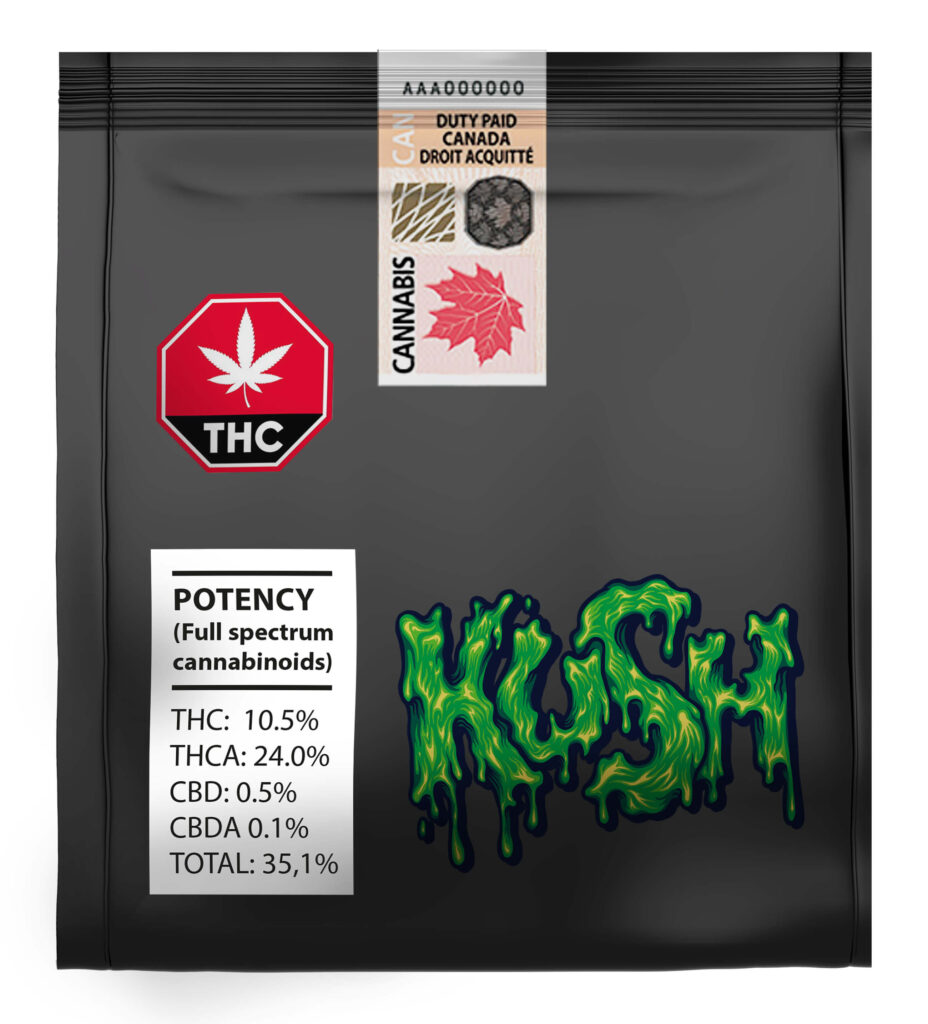
TAC stands for Total Active Cannabinoids and is a measure of the total cannabinoid content in a cannabis product. If, for example, 1 gram of dry flower has a TAC of 29%, that means that it contains 29% (or 290mg) of total cannabinoids.
You’ll usually find TAC levels printed on the labels of retail cannabis products bought from licensed dispensaries, collectives, or cannabis clubs, but generally not on unlicensed cannabis products from other sources.
Some cannabis products may have a detailed breakdown of their TAC, showing you exactly how much of each cannabinoid they contain. These labels may look like:
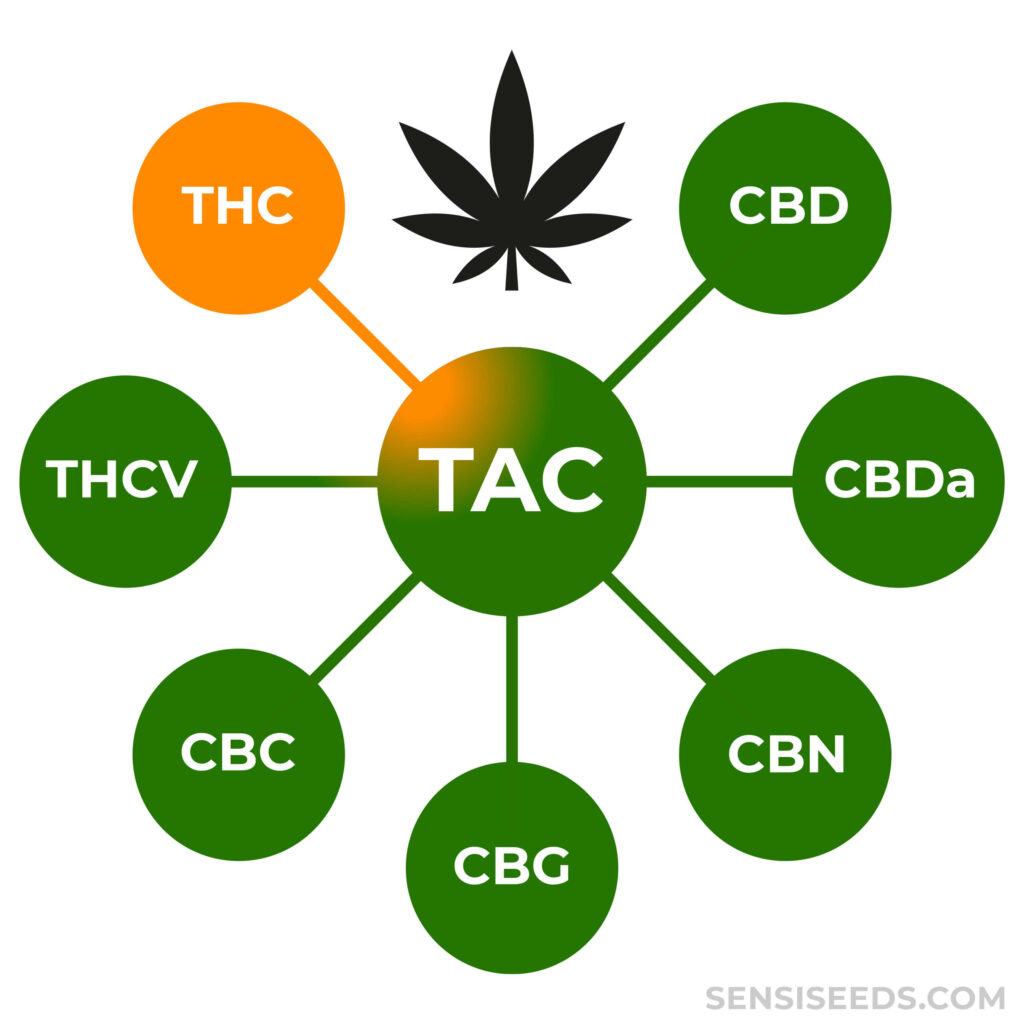
How is TAC different to THC?
While TAC measures the total content of all active cannabinoids in a particular cannabis product, THC measures only the content of one cannabinoid – namely Tetrahydrocannabinol.
Note that the THC levels of a cannabis product can be broken down, since cannabis can contain many different types of THC (which aren’t all created equal). The most common is delta-9 THC, often considered the main “intoxicating” compound in cannabis, but others may include:
- Delta 8 THC, a slightly different version of THC with similar, yet more potent, intoxicating effects.
- THCa (or tetrahydrocannabinolic acid), a non-intoxicating acidic compound that converts to THC when it is heated.
If you’re buying seeds, flowers, hash, an edible, or any other kind of legal/licensed cannabis product, consult its label and remember – TAC will tell you the total amount of active cannabinoids in that product, whereas THC will be only a measure of the tetrahydrocannabinol it contains.
If, for example, 1 gram of dry flower has a TAC of 29% and 25% total THC, that means it contains 29% (or 290mg) of total cannabinoids, and 25% (or 250mg) of total THC.